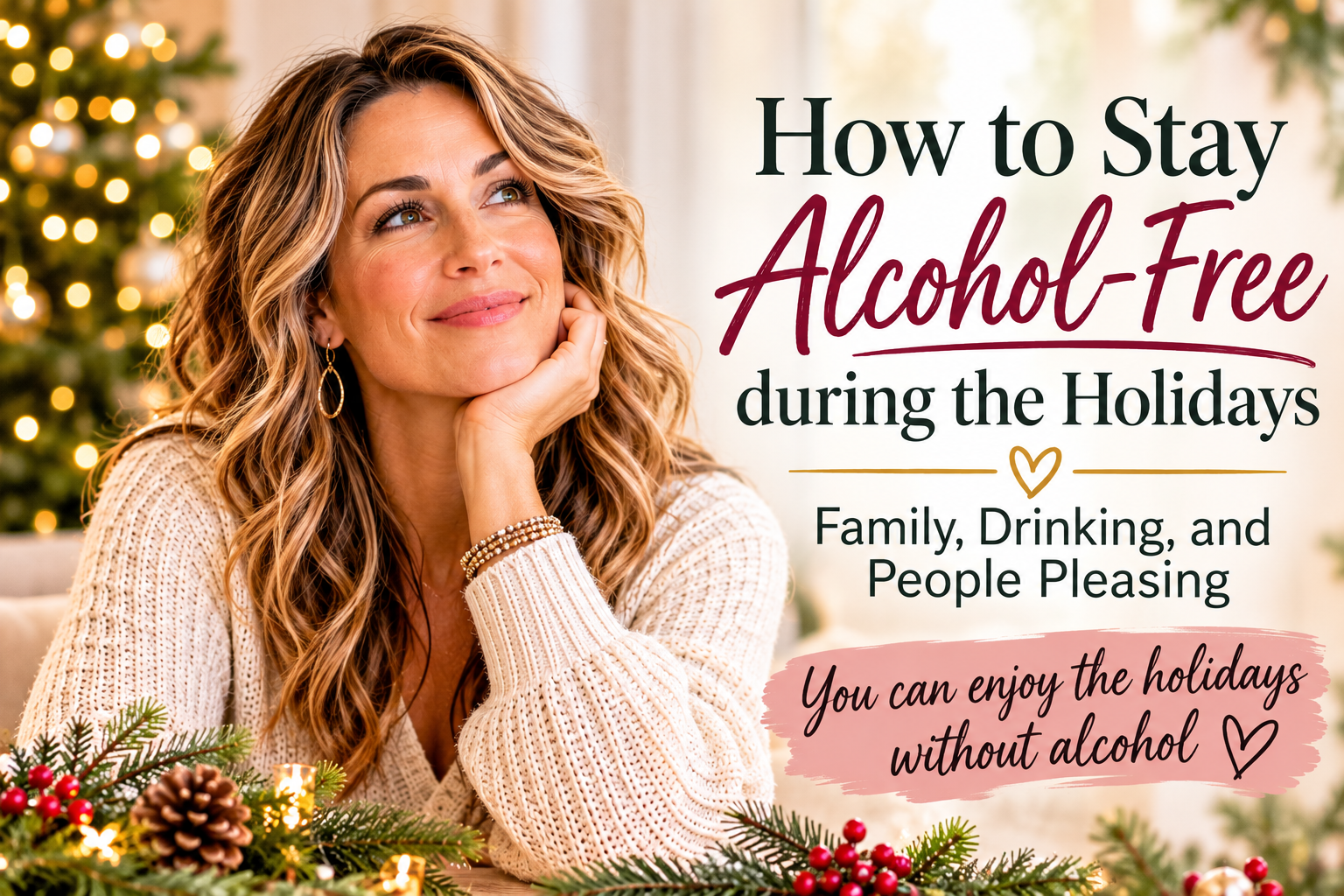
How to Stay Alcohol-Free During the Holidays
How to Stay Sober During the Holidays When Family, Drinking, and People Pleasing Make It Difficult
The holidays are supposed to be about connection, celebration, and spending time with the people we love. But if you're taking a break from alcohol or navigating sobriety, they can also bring up some unexpected challenges.
Maybe it's your first holiday without alcohol. Maybe you've been alcohol-free for a while but still find yourself feeling uncomfortable when everyone around you is drinking. Or maybe you know that certain family members, conversations, and old family dynamics make you want a glass of wine just to take the edge off.
And then there's the people pleasing.
You don't want to make anyone uncomfortable. You don't want to explain why you're not drinking. You don't want to be questioned, judged, or feel like the odd one out.
I get it.
When I first stopped drinking, the holidays were a little different. Alcohol had always been part of certain celebrations and social gatherings. Even when my immediate family wasn't big on drinking, it was still something I associated with being an adult, celebrating, relaxing, and participating.
What I eventually realized was that I wasn't necessarily afraid of missing the wine. I was afraid of missing the connection, the belonging, and the feeling of fitting in.
And that's an important distinction.
Because learning to navigate the holidays without alcohol isn't just about deciding what you're going to drink. It's also about learning how to honor yourself, establish boundaries, and stop abandoning your own needs to keep everyone else comfortable.
Here are some things to consider if you're trying to stay alcohol-free during the holidays.
1. Understand Why Drinking Feels So Normal During the Holidays
Alcohol is deeply woven into many holiday traditions.
Think about it:
- Champagne to celebrate.
- Wine with Thanksgiving or Christmas dinner.
- Spiked eggnog at family gatherings.
- Holiday cocktails at work parties.
- Wine nights with friends.
- The familiar joke about Mommy needing her holiday wine.
We've seen these images in movies, advertisements, social gatherings, and even our own family traditions for years.
Over time, we begin associating alcohol with connection, celebration, relaxation, and belonging.
So when you decide not to drink, it can feel like you're giving up more than a beverage. It can feel like you're stepping away from a tradition or doing something different from everyone around you.
If you're newly alcohol-free, this can feel especially uncomfortable.
But here's something I want you to remember: You don't need alcohol to participate in the holidays. You don't need a glass of wine to celebrate, connect with people, or enjoy yourself.
You are allowed to create new traditions that actually support the way you want to feel.
2. Recognize When People Pleasing Is Influencing Your Decision to Drink
This is something I really want you to pay attention to.
Sometimes we don't actually want the drink. We want to avoid the uncomfortable feeling of being the only person not drinking.
Maybe someone says:
"Come on, it's the holidays!"
"Just have one. You deserve it."
"Don't be so serious. Relax and have some fun."
And suddenly, you start questioning your decision.
You might even find yourself thinking, Maybe I should just have one so nobody makes a big deal about it.
This is where people pleasing can start working against you.
If you're someone who is used to keeping the peace, making everyone happy, and avoiding uncomfortable conversations, saying no to alcohol can feel like you're disappointing someone.
But what happens when keeping everyone else comfortable means going against what you actually want?
Maybe your priorities are your health, your sleep, your relationships, or waking up the next morning feeling good about yourself.
Those are your values.
And your values are important, especially during the holidays.
You can be kind without saying yes. You can love your family without participating in every tradition. And you can be part of the celebration without drinking alcohol.
You don't have to abandon yourself to make other people comfortable.
3. Look at What's Underneath Your Desire to Drink
One of the biggest things I encourage women to do is get curious about what's happening underneath the behavior.
If you notice that you want a drink every time you visit a particular family member, attend a certain gathering, or have a difficult conversation, pay attention.
That pattern is information.
Sometimes alcohol becomes a way to deal with:
- Family tension.
- Uncomfortable conversations.
- Feeling judged or misunderstood.
- Old family roles that you slip back into.
- The pressure to keep everyone happy.
- Feeling overwhelmed by hosting and taking care of everyone.
- Wanting permission to relax.
For some women, the holidays come with a lot of responsibility. You're organizing meals, buying presents, coordinating schedules, managing family dynamics, and making sure everyone else is happy.
By the time the celebration arrives, you're exhausted.
And that glass of wine can start to feel like permission to finally put your shoulders down.
But I want you to ask yourself something:
What am I actually looking for when I reach for alcohol?
Is it relaxation? Connection? A break from responsibility? Confidence? Permission to stop being the person who has everything under control?
Understanding what you're looking for can help you find other ways to meet those needs.
The goal isn't to blame your family or judge yourself. It's to become more aware of the situations and emotions that influence your relationship with alcohol.
4. You Don't Owe Everyone an Explanation for Not Drinking
One of the things that can make social situations uncomfortable is feeling like you have to explain your decision.
People might ask:
"Are you pregnant?"
"Why aren't you drinking?"
"Are you okay?"
"Do you have a problem with alcohol?"
Sometimes people simply don't know what to say or how to respond when someone stops drinking.
And sometimes people are uncomfortable with a decision that has nothing to do with them.
Either way, you don't owe everyone your entire story.
You get to decide how much you want to share.
You could simply say:
- "I'm feeling really good without alcohol."
- "I'm focusing on my health right now."
- "I'm not drinking tonight."
- "I'm taking a break from drinking."
- "I'm good with what I have, thank you!"
You don't need to turn every holiday gathering into a conversation about your relationship with alcohol.
And remember, not everyone is going to understand your decision. That's okay.
Your job isn't to convince everyone. Your job is to make decisions that align with what matters to you.
5. Make a Plan Before You Walk Through the Door
This is one of the most practical things you can do, especially if this is your first holiday without alcohol.
When you're feeling rested and clear-headed, it's often easier to make decisions that support your goals.
But after a long day of shopping, cooking, traveling, hosting, and managing family dynamics, you might feel differently.
Stress can make it harder to stick with decisions you made earlier.
That's why I encourage you to have a plan before you arrive.
Consider these questions:
What am I going to drink?
Bring a mocktail, sparkling water, or another nonalcoholic beverage you enjoy. Sometimes having something special in your hand makes social situations feel more comfortable.
Who can I talk to if I feel uncomfortable?
Identify someone who supports your decision and understands what you're working toward.
What situations might be difficult for me?
Think about certain relatives, conversations, traditions, or moments when you typically find yourself wanting to drink.
What time am I going to leave?
You don't have to stay until everyone else leaves. Give yourself permission to go home when you've had enough.
What do I want to remember tomorrow morning?
Bring yourself back to your why.
Maybe you want to wake up feeling rested. Maybe you want to remember the conversations. Maybe you want to feel proud that you honored a commitment to yourself.
Keep that reason close.
6. Find Alcohol-Free Holiday Drinks You Actually Enjoy
If you're newly alcohol-free, having a special beverage can make the transition feel a little easier.
When I first stopped drinking, I was a big mocktail girl.
I enjoyed having something in a wine glass or a festive drink that still felt like part of the celebration.
You can try:
- Sparkling water with fresh fruit.
- Cranberry and lime mocktails.
- Alcohol-free sparkling wine.
- A virgin mojito.
- Festive herbal teas.
- Sparkling water with rosemary and orange.
There are more alcohol-free options available now than ever before.
One thing to keep in mind is that some beverages marketed as nonalcoholic can still contain small amounts of alcohol. Check the label and choose what feels comfortable for you.
Also, if alcohol-free beer or wine feels triggering, you don't have to drink it. You can find something completely different.
The goal is to enjoy the experience without feeling like you're missing out.
7. Give Yourself Permission to Set Boundaries
Let's talk about something that doesn't get discussed enough: You don't have to attend every gathering.
And you don't have to stay at every gathering until the very end.
Sometimes the healthiest decision is to skip an event, leave early, or take a break when you need one.
If you know that a particular situation will be challenging, especially during your first alcohol-free holiday season, think about what boundaries would help you feel supported.
Maybe you decide to:
- Attend dinner but skip the after-party.
- Drive yourself so you can leave whenever you want.
- Spend less time around people who pressure you to drink.
- Take a walk when you need some space.
- Leave before the evening turns into a drinking event.
You are allowed to protect your peace.
And here's something else worth remembering: Sometimes relationships change when we start making different choices.
Some people will understand immediately. Others might need time. Some might never fully understand.
But you cannot spend your life performing for everyone else.
Your relationship with yourself matters, too.
8. Stop Judging Yourself and Learn From Your Experiences
I also want to talk about the women who are working toward an alcohol-free life but haven't completely stopped drinking.
Maybe you've made a decision not to drink, then found yourself drinking at a holiday party.
Maybe you've had a few alcohol-free months and then gone back to drinking.
It's easy to fall into an all-or-nothing mindset.
You tell yourself you're either doing really well or you've completely messed everything up.
But there's a middle ground.
Instead of shaming yourself, get curious.
What was happening before you decided to drink?
Were you feeling overwhelmed? Were you trying to fit in? Were you uncomfortable around a certain person? Did you feel like you needed permission to relax?
What can you learn from that experience?
The goal is to understand your patterns rather than use them as another reason to be hard on yourself.
You don't have to give up on yourself because something didn't go according to plan.
You can take what you learned and make a different decision moving forward.
9. Imagine Waking Up the Morning After the Holiday Feeling Proud
I want you to picture something.
It's the morning after Christmas or Thanksgiving.
You wake up feeling good. You're not trying to piece together conversations from the night before. You're not replaying things you said or wondering whether you embarrassed yourself.
You remember the laughter. You remember the conversations. You were present.
Maybe you spent time with your children, enjoyed dinner with your family, or laughed with your friends.
And most importantly, you feel proud because you honored what you wanted for yourself.
That's what I want you to focus on.
Sometimes we get so caught up in the fear of missing out that we forget what we might gain by not drinking.
You might gain better mornings, more presence, greater confidence, and a deeper sense of trust in yourself.
And you might discover that the things you thought you needed alcohol to enjoy are actually pretty wonderful without it.
You don't have to pay for your seat at the table with a glass of wine.
You already belong.
Final Thoughts: You Can Enjoy the Holidays Without Abandoning Yourself
If you're navigating your first holiday without alcohol, I want you to give yourself some grace.
You might feel uncomfortable. You might question your decision. You might find certain family dynamics challenging.
That's okay.
You don't need to have the perfect alcohol-free holiday. You just need to keep coming back to what matters to you.
Remember why you made this decision. Have a plan. Find people who support you. Give yourself permission to leave when you need to.
And most importantly, stop making your decisions based on what everyone else might think.
The holidays are an opportunity to practice showing up as yourself, even when that looks different from what other people expect.
You deserve to enjoy the holidays and wake up feeling good about the choices you made.
And you deserve relationships where you don't have to compromise yourself to belong.
Want Some Extra Support Navigating the Holidays Without Alcohol?
If you're looking for encouragement, reflection, and practical support as you explore an alcohol-free life, I'd love to invite you to check out Walks Without Wine.
It's a free five-day audio series designed to help you reconnect with yourself, explore your relationship with alcohol, and build confidence in your decision.
You can listen while walking, getting ready for the day, or preparing for a holiday gathering.
You don't have to figure everything out today. Start with one decision, one gathering, and one day at a time.
Explore Walks Without Wine: chrissyjaniga.com/walks-without-wine-series
Listen to the episode:
With love,
Chrissy