
Why You Reach for Wine (and How to Break the Habit)
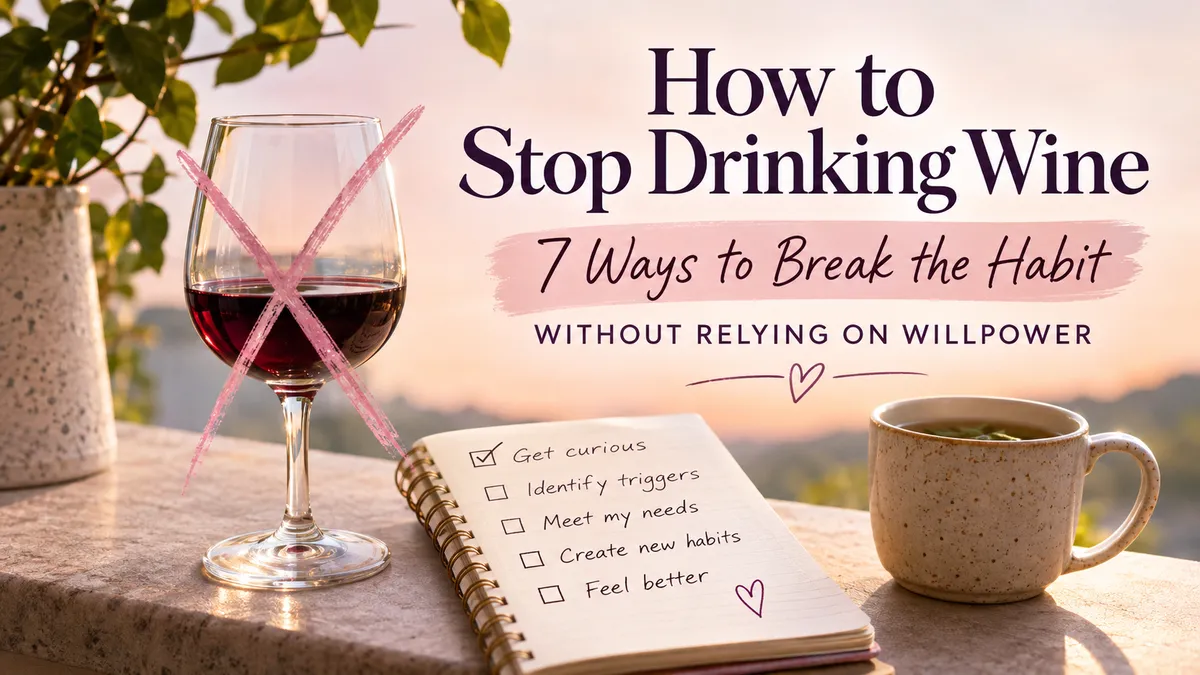
How to Stop Drinking Wine: 7 Ways to Break the Habit Without Relying on Willpower
Have you ever found yourself looking forward to that glass of wine after a long day?
Maybe it's your way of unwinding after work, celebrating the weekend, or finally having a moment to yourself.
You tell yourself you'll only have one or two glasses. Maybe you've even tried making rules about when you can drink, how much you can have, or which days of the week you'll stay alcohol-free.
Yet somehow, you keep finding yourself in the same cycle.
Here's something I want you to consider.
What if changing your relationship with alcohol isn't about having more willpower? What if it's about understanding why you reach for alcohol in the first place?
Whether you're drinking wine every evening, binge drinking on weekends, or simply questioning whether alcohol is still serving you, there are ways to start changing your habits without creating another set of rules.
Let's explore seven ways to break the drinking habit and begin building a healthier relationship with yourself.
1. Get Curious About Why You're Drinking
One of the first things I encourage women to do when they're thinking about cutting back or quitting alcohol is to start paying attention to their drinking patterns.
Not with judgment. Not with shame.
With curiosity.
When do you typically reach for alcohol?
Is it after a stressful workday? When you're feeling lonely? When you're out with friends? Maybe it's simply become part of your evening routine.
We often associate alcohol with certain emotions, experiences, and situations.
For example, if you've spent years pouring a glass of wine after work, your brain may have learned to associate that drink with relaxation.
Eventually, reaching for wine becomes automatic.
Instead of asking yourself, "Why can't I stop doing this?" try asking:
"What am I actually looking for when I reach for alcohol?"
You might discover that what you're really craving isn't the wine itself. It's relief, connection, comfort, excitement, or a break from your responsibilities.
That awareness is an important first step toward changing the habit.
2. Challenge the Stories You Tell Yourself About Alcohol
We give alcohol a lot of credit.
We tell ourselves things like:
Wine helps me relax.
I deserve a drink after a stressful day.
Socializing won't be as fun without alcohol.
Vacations are better with cocktails.
Life will be boring if I stop drinking.
I used to believe many of these things myself.
I looked forward to drinking on weekends. It was something exciting on my calendar, and I couldn't imagine socializing without it.
Yet when I started questioning those beliefs, I realized something important.
Alcohol wasn't necessarily making those experiences better. I had simply learned to associate it with having fun.
Think about the glass of wine you pour to unwind after work.
Maybe it feels relaxing in the moment.
What happens later?
Perhaps you wake up at 3 a.m. with your heart racing. Maybe your sleep is disrupted, you're anxious the next morning, or you spend hours replaying the night and wishing you'd stopped drinking sooner.
If something helps you relax temporarily but leaves you feeling worse the next day, is it really giving you what you need?
You don't have to change every belief overnight.
Start questioning whether the stories you've been telling yourself about alcohol are actually true.
3. Recognize When Moderation Becomes Exhausting
I spent plenty of time trying to moderate my drinking.
I made rules, negotiated with myself, and tried to convince myself that this time would be different.
At one point, after being alcohol-free for approximately six months, I decided to drink again.
I thought I could moderate.
While I didn't immediately return to my previous binge-drinking patterns, I still found myself thinking about alcohol far more than I wanted to.
I remember going on vacation and allowing myself two drinks a day.
Instead of simply enjoying the vacation, I was looking forward to those two drinks.
That experience taught me something.
Sometimes trying to control alcohol takes more mental energy than simply removing it.
Moderation can become a constant negotiation.
How many drinks can I have? What time should I start? Should I drink tonight or wait until the weekend?
For me, eventually, not drinking became easier than constantly trying to manage my drinking.
That doesn't mean everyone's journey has to look the same.
Some women begin by cutting back. Others experiment with 30 or 60 days alcohol-free. Some decide that removing alcohol completely is the best choice for them.
The important thing is paying attention to how much mental space alcohol is taking up in your life.
If moderation feels like a part-time job, that's information worth exploring.
4. Create a Plan Instead of Relying on Willpower
Have you ever woken up feeling completely committed to not drinking, only to change your mind by 5 p.m.?
You're exhausted. Work was stressful. The kids need something. You've been making decisions all day.
Suddenly, that glass of wine sounds really appealing.
This is one reason relying on willpower alone can be so difficult.
When we're tired, stressed, or overwhelmed, it's harder to follow through on our intentions.
Instead of hoping you'll make a different decision in the moment, create a plan ahead of time.
Start by identifying your biggest drinking trigger.
Maybe it's arriving home from work.
Your plan could be:
"When I finish work, I'm going to change my clothes, put on my sneakers, and go for a 10-minute walk before doing anything else."
If social situations are more challenging, your plan might involve bringing an alcohol-free beverage, deciding how you'll respond when someone offers you a drink, or making arrangements to leave when you're ready.
You don't need to overhaul your entire life.
Pick one situation that feels challenging and create one realistic plan.
Small changes, repeated consistently, can help you develop new habits.
5. Meet Your Emotional Needs Instead of Just Replacing the Drink
This is one of the most important parts of changing your relationship with alcohol.
Sometimes we focus so much on removing the behavior that we forget to explore what was driving it.
Let's say you typically drink because you're lonely.
Replacing wine with sparkling water might help you avoid alcohol that evening, but it doesn't necessarily address your loneliness.
You might actually need connection.
Maybe that means calling a friend, joining a group, or making plans with someone.
If you're overwhelmed, perhaps you need rest, a walk, deep breathing, or a few minutes to yourself.
If you're bored, you might need something new to look forward to.
Maybe it's taking a class, starting a creative hobby, or exploring an interest you've put off for years.
The point is to begin asking yourself:
"What do I actually need right now, and how can I meet that need in a healthier way?"
I've also seen how easily we can replace one habit with another.
For example, someone might stop drinking but begin reaching for sweets every evening.
There's nothing wrong with enjoying something sweet, but if the new behavior starts feeling frustrating or difficult to control, it may be worth exploring whether the same emotional need is still there.
Changing a habit isn't always about finding a replacement.
Sometimes it's about understanding the underlying emotional patterns and learning how to support yourself differently.
6. Make Alcohol-Free Living Something You Look Forward To
One of the biggest mistakes we can make when exploring an alcohol-free lifestyle is focusing entirely on what we're giving up.
No more wine nights.
No more cocktails on vacation.
No more drinking with friends.
When that's all we focus on, of course the idea of quitting can feel like a loss.
What if you started focusing on what you could gain instead?
Better mornings. More energy. Improved sleep. Greater self-trust. More time to explore things you genuinely enjoy.
Start creating experiences that make your alcohol-free life feel exciting.
Try a new mocktail in a beautiful glass. Plan a morning walk with a friend. Take a class. Explore a new hobby. Create an evening routine you genuinely enjoy.
One thing that surprised me about becoming alcohol-free was how much my life changed beyond drinking.
When I stopped drinking, I wasn't planning to become an author, podcast host, or alcohol-free coach.
Those things weren't even on my radar.
I simply wanted to feel healthier and better about myself.
Over time, new interests, opportunities, and possibilities began opening up.
That's one of the things I love most about this journey.
You might start by removing alcohol, but you could end up discovering parts of yourself you didn't even know existed.
7. Stop Thinking You Have to Figure Out Forever
The word forever can feel overwhelming.
If you're questioning your relationship with alcohol, the thought of never drinking again might bring up fear, resistance, or uncertainty.
You don't have to figure out the rest of your life today.
Maybe you start with seven days.
Maybe you decide to take a 30-day break.
Maybe your first step is simply paying attention to when you drink and what you're feeling beforehand.
The goal isn't perfection.
It's learning about yourself.
Even if you find yourself drinking after planning not to, you can use that experience to better understand your patterns.
What happened beforehand? What were you feeling? What did you need? What could you try differently next time?
Every moment of awareness gives you information.
I also want you to understand that thinking about alcohol when you're trying to stop drinking doesn't mean you're doing something wrong.
Our brains learn through repetition.
If you've spent years associating stress with drinking, it makes sense that the thought of alcohol might appear when you're stressed.
I remember having an incredibly stressful day at work after I'd already stopped drinking.
The thought of having a drink crossed my mind.
Instead of acting on it, I recognized what was happening.
My brain had learned to associate stress with alcohol, even though I knew drinking wasn't going to solve the problem.
Over time, that association became weaker.
Just because you think about drinking doesn't mean you have to drink.
You can notice the thought, acknowledge the emotion, and make a different choice.
That's how you begin building self-trust.
The Bigger Picture: It's Not Just About Alcohol
If there's one thing I hope you take away from this article, it's that changing your drinking habits isn't simply about removing a beverage.
It's about understanding yourself.
It's recognizing the emotional needs, beliefs, and routines that have shaped your relationship with alcohol.
It's learning how to respond to stress, loneliness, boredom, and overwhelm in ways that actually support you.
Most importantly, it's realizing that you don't have to shame yourself into changing.
You can approach this journey with curiosity, compassion, and a willingness to learn.
You don't need to have everything figured out.
Start with one habit. One moment of awareness. One small change.
You might be surprised by how much your life begins to shift.
Ready to Explore Your Relationship With Alcohol?
If you're ready to get curious about your drinking patterns and discover what's possible beyond alcohol, I created something just for you.
Walks Without Wine is my FREE five-part audio series designed to help you explore your relationship with alcohol, understand the patterns keeping you stuck, and begin building a life that feels good without drinking.
You'll also receive a companion workbook to help you reflect on what you're learning.
You can listen while walking, driving, folding laundry, or whenever you have a few minutes to yourself.
Prefer listening? This blog was inspired by an episode of my Soulful and Sober podcast, where I share more of my personal experiences and practical tips for breaking the drinking habit.
Listen to Soulful and Sober latest episode:
Remember, this journey isn't about becoming perfect.
It's about becoming more connected to yourself and creating a life you genuinely enjoy.💜


